


What Is Craniosacral Therapy and How Can It Help?
- 5 days ago
- 5 min read
Craniosacral therapy (CST) is a gentle, hands-on therapy that uses light touch to support the body's natural ability to relax and self-regulate. Many people find it helpful for stress, tension headaches, and general wellbeing. At New Town Therapy Edinburgh, CST is offered by our experienced therapist Serena.
If you live or work in Edinburgh, you'll know how easily stress builds up. Long days at a desk in the city centre, busy commutes across town, and the buzz of festival season can all take their toll on your body and mind. Many people search for a calmer, more gentle way to ease tension and restore a sense of balance.
That's where craniosacral therapy comes in. It's a quiet, light-touch treatment that many people find deeply relaxing. This article explains what CST is, where it comes from, and how it may help. You'll also learn what to expect during a session, and how to find a qualified therapist in Edinburgh.
What is Craniosacral Therapy?
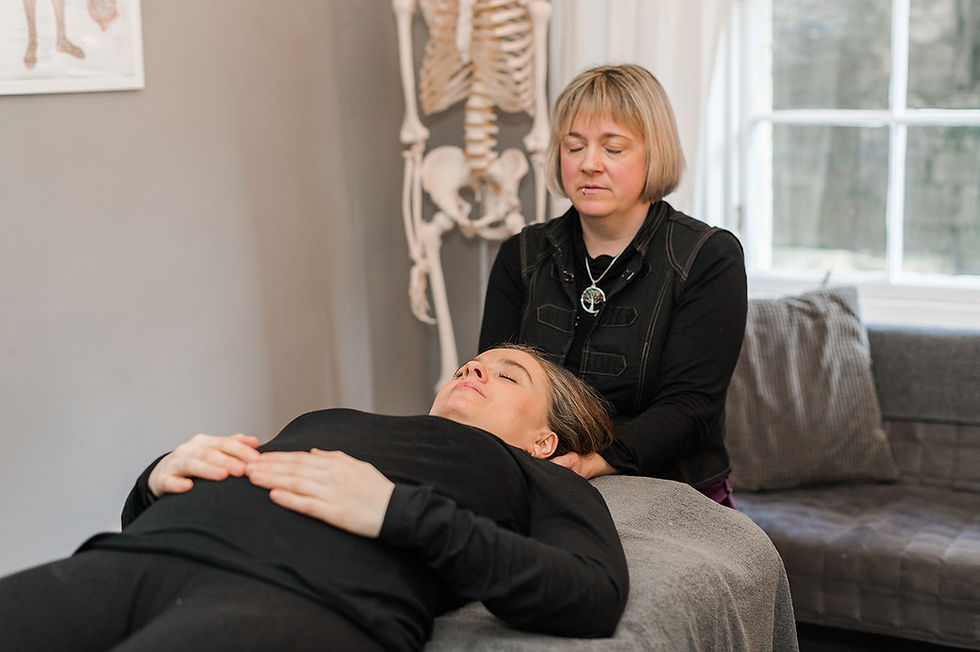
Craniosacral therapy is a gentle, hands-on approach to bodywork. A therapist uses very light touch—often no heavier than the weight of a coin—to encourage relaxation throughout the body.
The name comes from the craniosacral system, which includes the membranes and fluid surrounding your brain and spinal cord. In simple terms, this is the system that runs from your skull (cranium) down to the base of your spine (sacrum). Practitioners work with this system to support the body's own ability to settle and self-regulate.
CST is non-invasive and fully clothed. There's no manipulation or forceful movement. Instead, the focus is on creating space for your body to relax.
Where did craniosacral therapy come from?
CST has its roots in osteopathy. It was developed in the 1970s and 1980s by Dr John Upledger, an American osteopathic physician. In 2001, TIME magazine named Dr Upledger among its "Next Wave of Innovators" for his work developing the therapy.
The core principle is simple. Your body has a natural ability to heal and rebalance itself. By using gentle touch and careful listening through the hands, a craniosacral therapist aims to support that natural process rather than force it.
What conditions can craniosacral therapy help with?
It's important to be clear: CST is not a cure, and results vary from person to person. That said, many people find it a calming, supportive therapy. People often turn to CST for help with:
Stress and tension: Many clients find CST deeply relaxing and use it to wind down from busy working lives.
Headaches and migraines: Some people find gentle bodywork helpful when managing recurring head tension.
Chronic pain: CST may support people living with long-term pain as part of a wider care plan.
Sleep and nervous system regulation: Many people report feeling calmer and more settled after a session.
General wellbeing: Some clients simply enjoy CST as part of looking after their overall health.
If you're an Edinburgh office worker carrying tension in your neck and shoulders, or a city-centre commuter feeling frazzled, CST may offer a gentle way to reset.
What can you expect during a craniosacral therapy session?
If you've never tried CST, knowing what to expect can help you feel at ease. Here's a typical session at New Town Therapy Edinburgh:
A gentle conversation: Your therapist will start by asking about your health, lifestyle, and what brought you in. This helps tailor the session to you.
A comfortable, clothed treatment: You'll lie down, fully clothed, on a treatment couch. There's nothing to take off and nothing invasive.
Light, attentive touch: Your therapist places their hands lightly on different areas, such as your head, spine, or feet, listening through their hands for areas of tension.
Time to relax: Many people drift into a deeply relaxed state. Some feel warmth, a sense of release, or simply a quiet calm.
A session usually lasts around an hour. Afterwards, many people feel relaxed and grounded, though it's normal for responses to vary.
What are the benefits of craniosacral therapy?
People choose CST for several reasons:
It's gentle: The light-touch approach suits people who prefer to avoid deep pressure or forceful techniques.
It's deeply relaxing: Many clients find it a welcome chance to slow down and switch off.
It supports your whole self: CST takes a holistic view, considering body and mind together.
It complements other treatments: CST can sit alongside physiotherapy, sports massage, or remedial massage as part of a wider wellbeing plan.
For busy Edinburgh residents juggling work, family, and city life, that hour of calm can be genuinely restorative.
How do you find a qualified craniosacral therapist in Edinburgh?
Choosing the right therapist matters. Here's what to look for:
Recognised training: Look for a therapist who has trained with a respected body, such as the Upledger Institute UK.
Professional registration: A qualified practitioner should be registered with a relevant professional organisation.
Experience and approach: A good therapist will explain their approach clearly and make you feel comfortable.
At New Town Therapy Edinburgh, craniosacral therapy is offered by Serena, one of our experienced therapists. Based in Edinburgh's New Town, the clinic is easy to reach from Stockbridge, Canonmills, Comely Bank, and across central Edinburgh. Click here to book your appointment
Could craniosacral therapy be right for you?
Craniosacral therapy offers a gentle, calming way to support your body and mind. It won't suit everyone, and it isn't a quick fix. But many people find it a valuable part of looking after their wellbeing, especially when life in Edinburgh feels relentless.
If you're curious about CST and would like personalised advice, the team at New Town Therapy Edinburgh is here to help. Contact our clinic to discuss whether craniosacral therapy with Serena may be a good fit for your needs, or book an appointment online.
Frequently asked questions
How long does a craniosacral therapy session last?
A typical CST session lasts around an hour. Your first appointment may include a little extra time for a conversation about your health, lifestyle, and what you'd like to focus on.
Does craniosacral therapy hurt?
No. CST uses very light, gentle touch and is non-invasive. Most people find it relaxing rather than uncomfortable, and you remain fully clothed throughout.
How many craniosacral therapy sessions will I need?
This varies from person to person. Some people enjoy a single session for relaxation, while others find a series of appointments more beneficial. Your therapist can suggest an approach based on your needs.
Can craniosacral therapy be combined with other treatments?
Yes. Many people find CST works well alongside physiotherapy, sports massage, or remedial massage. At New Town Therapy Edinburgh, our team can help you decide which combination may suit you best.


Comments